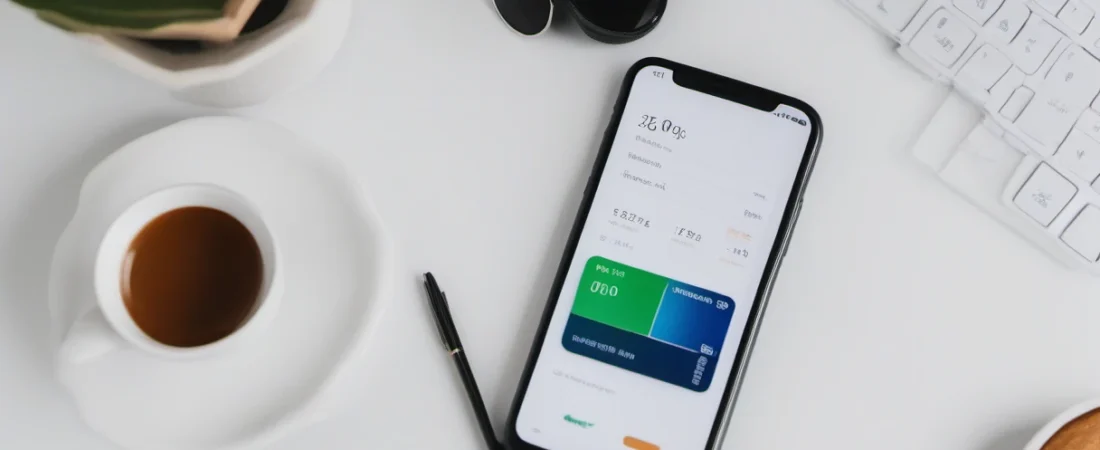
Apple’s Big Event Is Today — Here’s How to Pay for It Without Interest
Apple’s September 9 keynote has the internet searching “new iPhone” and “iPhone Ultra” by the tens of thousands, and this year’s lineup looks like the most expensive one ever: the iPhone 18 Pro is widely expected to start around $1,299, with analyst forecasts pointing to price increases of $200–$300 over the iPhone 17 Pro’s $1,099 launch price, plus a new premium “Ultra” tier and a foldable on the roadmap. If you are upgrading, the question is not which phone—it is how you pay for it. Done right, a $1,300 phone can cost you exactly $1,300. Done wrong, the same phone quietly costs $1,500+ in credit card interest.
Here are the financing routes that actually make sense in September 2026, ranked by how much they save you.
Route 1: Apple Card Monthly Installments (ACMI) — 0% APR, 24 Months
Buy direct from Apple with the Apple Card and choose Monthly Installments at checkout. This is a true 0% APR financing option for eligible Apple products:
- An iPhone 18 Pro at $1,299 splits into 24 payments of about $54/month, interest-free.
- You also earn 3% Daily Cash back on the full purchase price, paid up front into your Apple Cash balance—roughly $39 on a $1,299 phone.
- Each installment is a separate 0% loan; paying one off early never hurts.
The catches: you need an Apple Card (Goldman Sachs issuer, US only), a credit profile good enough to be approved, and the phone must be bought from Apple (online or Apple Store). Also note that ACMI uses part of your credit line as the balance even though it accrues no interest—relevant if you are planning a mortgage application soon.
Route 2: Carrier Installment Plans — 0% for 24–36 Months
Verizon, AT&T, and T-Mobile all finance handsets on your monthly wireless bill at 0% APR over 24 or 36 months for well-qualified customers, per Apple’s own financing page. Carriers sweeten this with trade-in credits and bill-credit rewards that can knock hundreds off—but those credits are spread over the full term and usually require a new or upgraded line. If you were going to pay for a premium unlimited plan anyway, carrier financing is often the cheapest all-in route. If you would switch plans to chase a promo, run the 24-month math first; the “free phone” almost never is.
Route 3: A 0% Intro APR Credit Card — Best If You Also Buy Accessories (or Need Longer Than Apple Offers)
If you cannot get the Apple Card, or you want flexibility to buy anywhere, open a general 0% intro purchase APR card before you shop. Current standouts from the Bankrate roundup:
- Wells Fargo Reflect: one of the longest intro windows on the market (21+ months on purchases with on-time payments) — enough runway to pay off a flagship phone plus a laptop interest-free.
- Citi Diamond Preferred: 0% on purchases for 12 months (and 21 months on balance transfers); variable 16.49%–27.24% APR after that.
- Chase Freedom Unlimited: 0% intro on purchases for 15 months, then earns 1.5% cash back on everything—including the phone.
Two rules: (1) apply before the purchase so the promo clock starts on time, and (2) set autopay to more than the minimum. On a $1,300 balance, the 12-month payoff is about $109/month, 15 months about $87. Pay only the minimum and the balance outlives the promo—then the 20%+ standard APR hits everything remaining.
Route 4: Pay Cash — and Negotiate the Trade-In Instead
Do not overlook the boring option. With interest rates on savings accounts still respectable in 2026, paying cash avoids new debt entirely—and you can stack it with the one discount that works for everyone: trade-in value. Apple is currently advertising $40–$720 off iPhone 17 Pro models with trade, and older devices hold value on the open market. Selling a recent iPhone privately before the keynote—when demand and trade-in offers peak—often beats Apple’s instant credit.
Timing tip that repeats every September: the moment new models are announced, the previous generation officially drops in price or gets discontinued. Forbes reported iPhone 17 Pro inventory being cleared at steep discounts within days of this week’s event. A one-year-old flagship at a $250 discount, bought cash or on a 0% card, is the best value play in the Apple ecosystem.
Route 5: What to Avoid — Buy Now, Pay Later and Revolving the Balance
BNPL plans (Affirm, Klarna, Afterpay) on a $1,300 phone often advertise 0% but schedule 25–50% of the price into large down payments, charge late fees aggressively, and add hard-to-track installment debt that lenders now scrutinize on mortgage and auto applications. And the classic trap: putting the phone on a regular rewards card and paying the minimum. At a typical 24% APR, a $1,300 balance paid at 3% minimums takes over four years and roughly $700 in interest—you would have bought a second phone for your trouble.
Frequently Asked Questions
Does 0% financing hurt my credit?
No—0% installment plans are reported like any other account. On-time payments help your score. The only real concern is credit utilization if a large ACMI balance consumes most of your line.
Can I combine a 0% card with trade-in credit?
Yes. Trade-in reduces the purchase price; the card finances what remains. Stacking both is how you get a flagship for a few hundred dollars out of pocket.
Is the Apple Card worth it just for one phone?
If you will pay off the installments within the year, the 3% Daily Cash plus 0% financing is a strong deal—but remember the card is Apple Pay-centric and closes the account’s benefits if you ever carry a balance elsewhere.
The Bottom Line
Every Apple event spawns the same regret cycle: great phone, terrible payment plan. The fix is simple. Pick a true 0% route—ACMI, carrier installments, or a 12–21 month intro APR card—pair it with maximum trade-in value, and set an autopay that clears the balance before the promo ends. The phone is the same either way; the interest is a choice.